

Comparisons show people's subjective happiness does not always correlate with the United Nations Development Programme's measurement of development.
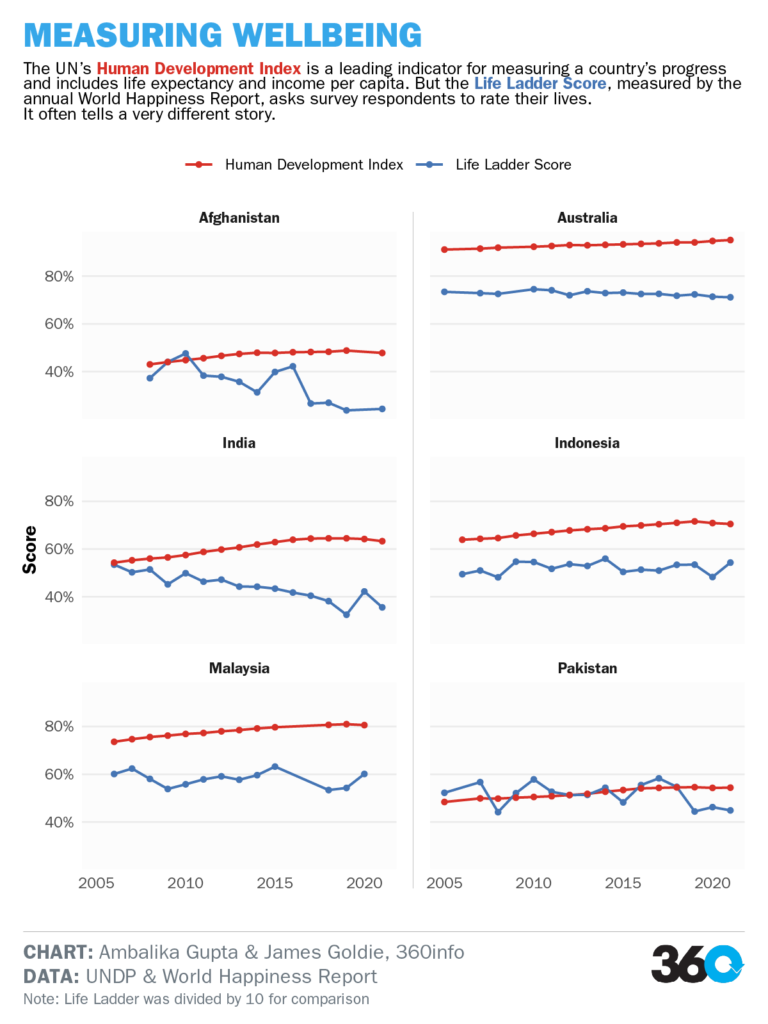 Time series charts comparing different progress measurements of Afghanistan, Australia, India, Indonesia, Malaysia and Pakistan. : Ambalika Gupta and James Goldie, 360info CC BY 4.0
Comparisons show people’s subjective happiness does not always correlate with the United Nations Development Programme’s measurement of development.
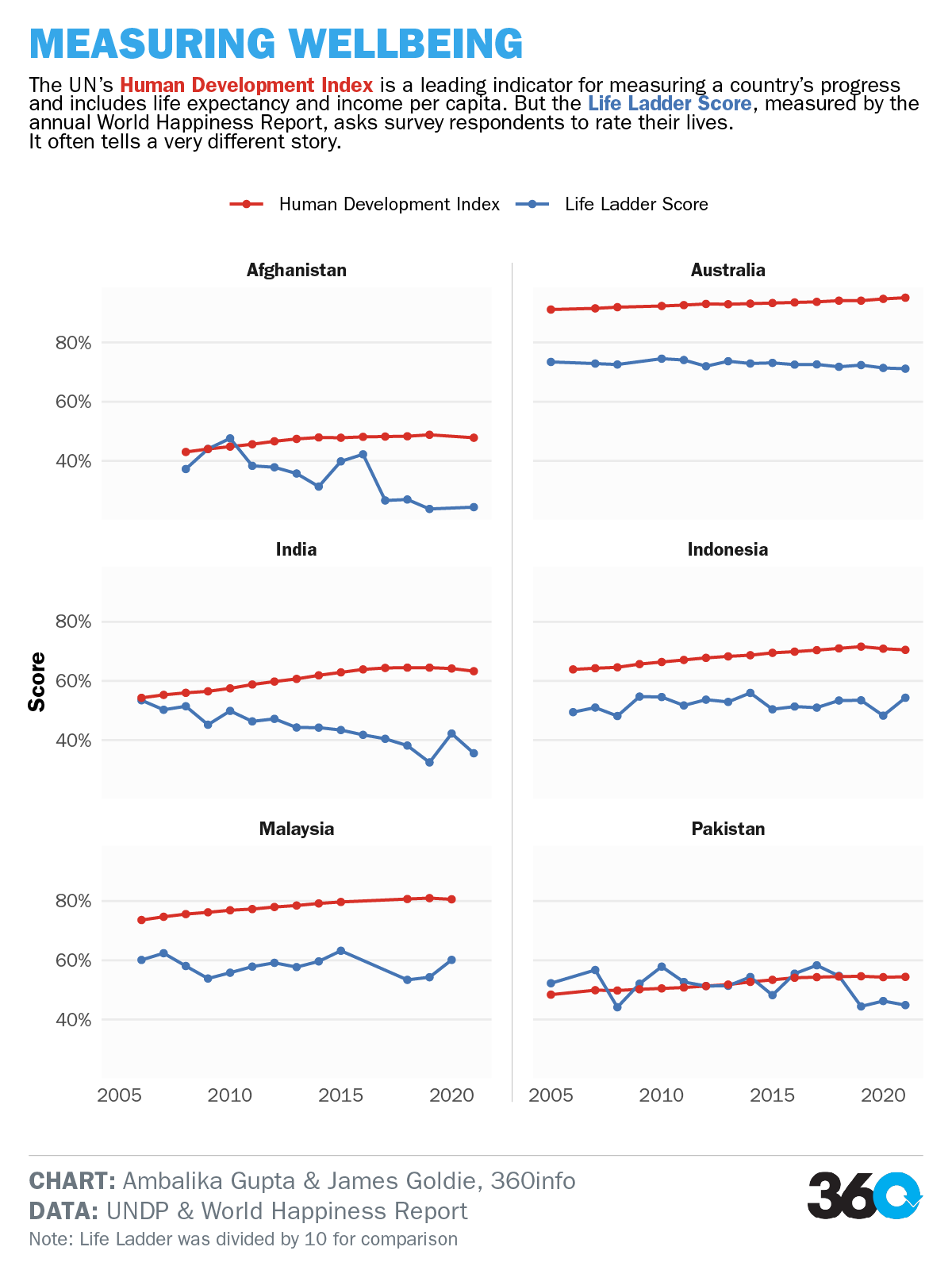
The variations in people’s happiness could be influenced by many factors including the state of the economy, employment, sense of security or large outbreaks of diseases.
Originally published under Creative Commons by 360info™.
Editors Note: In the story “Wellbeing economy” sent at: 05/06/2023 08:13.
This is a corrected repeat.
Enjoy this article?
Sign up for our fortnightly newsletter
Are you a journalist?
Sign up for our wire service